
Keeping VAD Dressings Intact: The Evidence Behind Dressing Adherence
Maintaining vascular access device (VAD) dressing integrity is a well-established component of safe vascular access care. When a dressing lifts, loosens or otherwise becomes compromised, an unplanned dressing change may be necessary. This creates additional opportunities for site manipulation and potential contamination. Dressing disruption has been associated with an increased risk of catheter-related bloodstream infection (CRBSI).¹
Supporting Evidence-Based VAD Dressing Securement
Recent guidance from vascular access, infusion and infection prevention organizations recognizes the role of additional adhesives when enhanced dressing adherence is needed. The 2024 Infusion Therapy Standards of Practice2, the 2024 Standards of Care for Peripheral Intravenous Catheters: Evidence-Based Expert Consensus3, and the Association for Professionals in Infection Control and Epidemiology’s 2025 implementation guidance4 all address enhanced adherence strategies, including the use of gum mastic liquid adhesive.
The clinical evidence supporting these recommendations includes research on Mastisol® Liquid Adhesive’s unique gum mastic formulation, which has been shown to enhance the adhesive power of wound closure strips,5 medical devices,6,7 and VAD dressings.8
Incorporating an additional adhesive when enhanced adherence is needed can help clinicians proactively address dressing integrity rather than responding to a dressing after it has already begun to fail.
Helping VAD Dressings Stay Intact Longer
One of the key goals of enhanced VAD dressing adherence is to reduce dressing disruption and the need for premature dressing changes. Clinical evidence demonstrates how the use of Mastisol can help achieve this goal.
The randomized controlled STICKY Trial evaluated the use of gum mastic liquid adhesive with internal jugular central venous catheter dressings in intensive care patients.
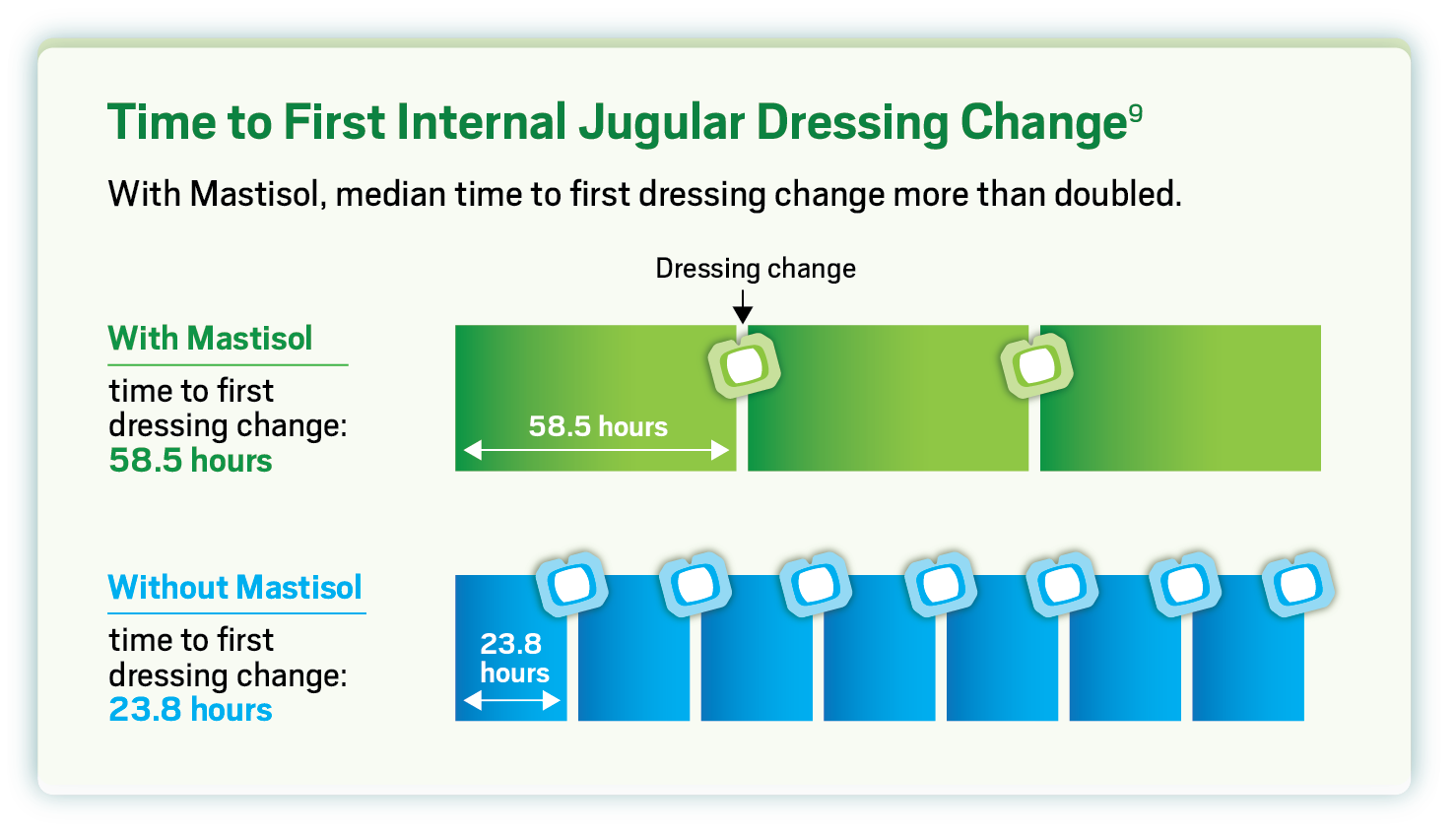
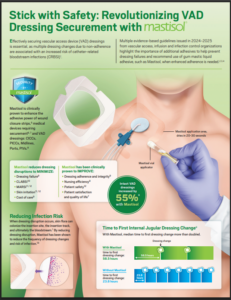
The median time to first dressing change was 58.5 hours with Mastisol compared with 23.8 hours without Mastisol—more than doubling the time to first dressing change.9
The benefits of maintaining dressing integrity extend beyond dressing longevity.
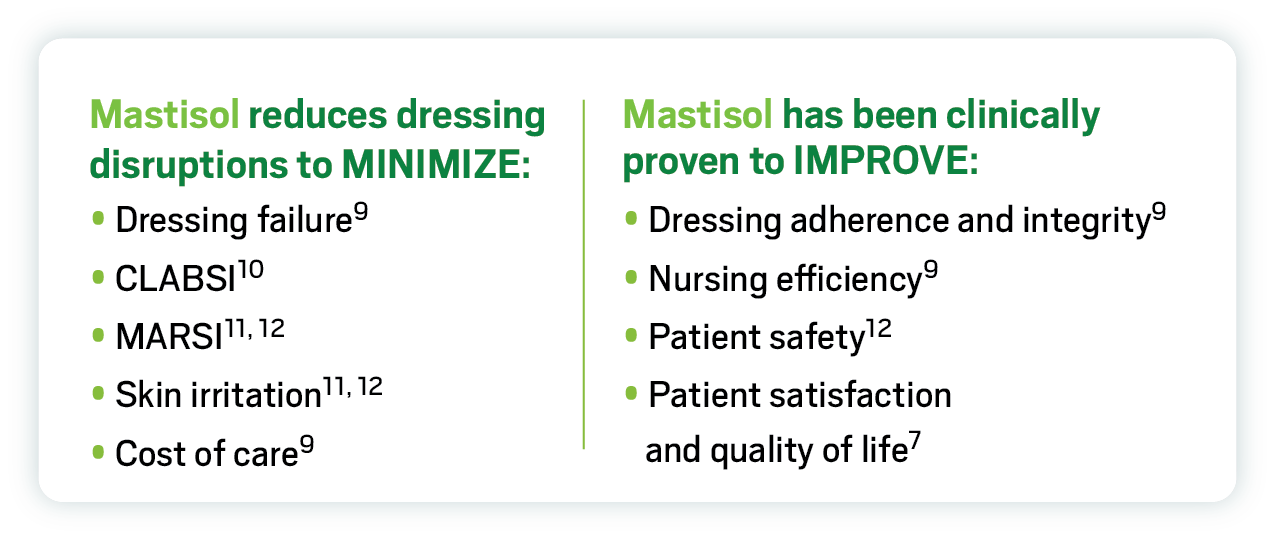
Reducing premature dressing changes can support nursing efficiency and minimize repeated disruption of the insertion site. Mastisol has also been associated with improvements in patient safety12, and patient satisfaction and quality of life7.
Reducing the Risks Associated with Dressing Disruption
Perhaps the most important benefit of improving VAD dressing integrity is the opportunity to reduce infection risk. An intact dressing helps protect the catheter insertion site from contamination, while dressing disruption and the need for premature dressing changes can compromise that protection.
When dressing disruption occurs, skin flora can colonize the catheter insertion site and insertion track, potentially reaching the bloodstream.
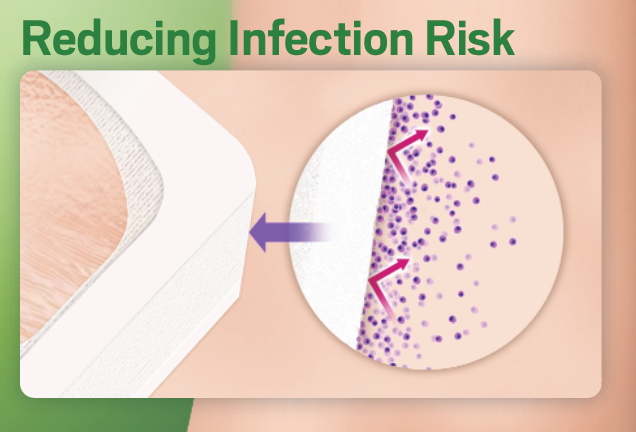
Reducing dressing disruption and the need for repeated dressing changes can therefore help protect the insertion site and reduce infection risk. One study demonstrated a 90% reduction in CLABSI rates following an intervention that included Mastisol.13
A Simple Step with Multiple Benefits
Improving VAD dressing adherence may be a relatively simple addition to clinical practice, but its impact can extend throughout the duration of vascular access therapy. By helping dressings remain intact, clinicians can reduce premature dressing changes and unnecessary site disruption while supporting infection prevention, nursing efficiency, and patient safety. Mastisol offers an evidence-based approach to enhanced adherence that aligns with current clinical guidelines and is supported by a growing body of research.
Explore the evidence for yourself! Download our Stick with Safety: Revolutionizing VAD Dressing Securement with Mastisol infographic for a visual overview of the research, clinical outcomes, and evidence-based guidelines supporting Mastisol in vascular access care.
- Timsit JF, Bouadma L, Ruckly S, et al. Dressing disruption is a major risk factor for catheter- related infections. Crit Care Med. 2012;40:1707-14. doi: 1097/CCM.0b013e31824e0d46.2.
- Nickel B, Gorski L, Kleidon T, et al. Infusion Therapy Standards of Practice, 9th Edition. J Infus Nurs. 2024;47(1S): S1-S285. doi: 1097/NAN.0000000000000532.
- Thompson J, Steinheiser MM, Hotchkiss JB, et al. Standards of Care for Peripheral Intravenous Catheters: Evidence-Based Expert Consensus. J Assoc Vasc Access. 2024;29(3):15-26. doi: 12968/bjon.2024.0422.
- Association for Professionals in Infection Control and Epidemiology (APIC). Preventing Catheter-Associated Bloodstream Infections in Adults: Implementation Guide. APIC: Arlington, VA: /© 2025. Available at https://apic.org/wp-content/uploads/2025/07/CABSI-Implementation-Guide-005.pdf. Accessed September 17, 2026.
- Moy RL, Quan MB. An evaluation of wound closure tapes. J Dermatol Surg Oncol. 1990;16:721-3. doi: 1111/j.1524-4725.1990.tb00110.x.
- Gamble JJ, McKay WP, Peeling A, et al. A comparison of methods used to secure pediatric endotracheal tubes using a live human dermal model. Can J Anaesth. 2021;68:645-52. doi: 1007/s12630-020-01904-0.
- Vowels S. Quality Improvement Project to Assess the Impact of Gum Mastic Liquid Adhesive on the Integrity and Durability of Driveline Dressings, Risk of Infection, and Patient Satisfaction. J Assoc Vasc Access. 2023; 28(3): 31–37. doi: 2309/JAVA-D-23-00006.
- Doyle L, Greene C. Using audit, education, and gum mastic liquid adhesive to reduce infection risk improve vascular access dressing integrity and patient safety. Presented at: Association for Vascular Access Annual Scientific Meeting; 2023 Oct 14–17; Portland, OR.
- Marsh N, O’Brien C, Larsen EN et al. Securing Jugular Central Venous Catheters with Dressings Fixed to a Liquid Adhesive to Prevent Dressing Failure in Intensive Care Patients (the STICKY Trial): A Randomized Controlled Trial. Crit Care Med. 2025 Feb 1;53(2):e282-e293. doi: 10.1097/CCM.0000000000006533.
- Mazzeffi M, White MP, Wade A, et al. Interprofessional Approach to Reducing Central Line-Associated Bloodstream Infections in a Cardiac Surgical Intensive Care Unit. Crit Care Nurse. 2025;45(3):11-22. doi: 4037/ccn2025723.
- DeVries M, Sarbeno J, Scott N, Wickert M, Hayes LM. Improving Vascular Access Dressing Integrity in the Acute Care Setting: A Quality Improvement Project. J Wound Ostomy Continence Nurs. 2021 Sep-Oct 01;48(5):383-388. doi: 1097/WON.0000000000000787.
- Ryder M, Duley C. Evaluation of compatibility of a gum mastic liquid adhesive and liquid adhesive remover with an alcoholic chlorhexidine gluconate skin preparation. J Infus Nurs. 2017; 40:245-52. doi: 1097/NAN.0000000000000230.
- Gaskill K, Wilder K, Sneed E, Pujals AJ, Newman K. Improving Maintenance of Central Line Dressing to Reduce Risk of Central Line-Associated Bloodstream Infections in an Acute-Care Setting. HCA Healthc J Med. 2024;5(5):569-576. doi: 36518/2689-0216.2025.